Offerings
Every person, project, and organization is different. We work with each team to understand their goals, their audience, and the kind of learning experience they hope to create. From educational workshops on the impacts of colonization, to resource development rooted in Indigenous foods, to multi-session cultural safety learning journeys that unfold across seasonal timelines, each project is shaped with care and intention.
Our work can support schools, universities, health organizations, government teams, food service programs, community groups, and professional learning spaces. We help participants better understand the importance of Indigenous foods, culture, language, land-based knowledge, and the relationships that connect them.
Whenever possible, we prefer to custom-tailor workshops, events, and resources so that each host can share their vision in a way that feels meaningful, relevant, and impactful. Below are a few examples of previous workshops and learning experiences. You can also visit our resources section to explore past projects, publications, tools, and other materials we have found useful along the way.
We strive to host dynamic events and create powerful resources that help make the world more accessible for Indigenous Peoples. Our work is grounded in relationship, collaboration, and meaningful change.

Indigenous Food Learning Experiences
-
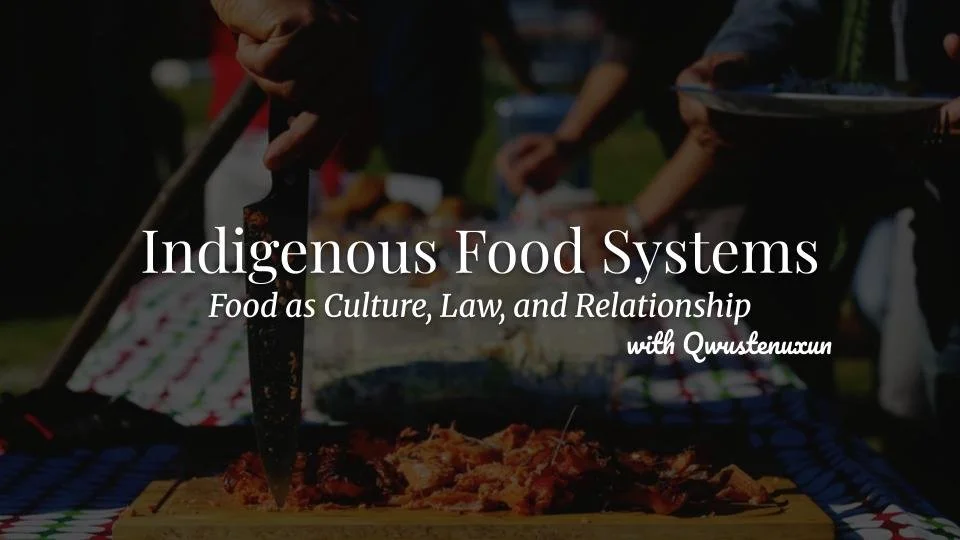
Indigenous Food Systems
This workshop introduces Indigenous food systems as living relationships between land, water, language, family, law, wellness, and responsibility.
Through story, teaching, and lived experience, Qwustenuxun explores how Indigenous foods are connected to harvesting, preservation, trade, governance, ceremony, seasonal movement, and community care. Participants are invited to look beyond food as ingredients or recipes and understand it as part of a much larger cultural system.
The session also looks at how colonization, displacement, food policy, and modern food systems have disrupted Indigenous food relationships, while highlighting the ways communities continue to restore, protect, and celebrate Indigenous food knowledge today.
This workshop is a strong fit for schools, health organizations, government teams, food service programs, community groups, and professional learning spaces seeking a meaningful introduction to Indigenous food sovereignty and cultural safety.
-
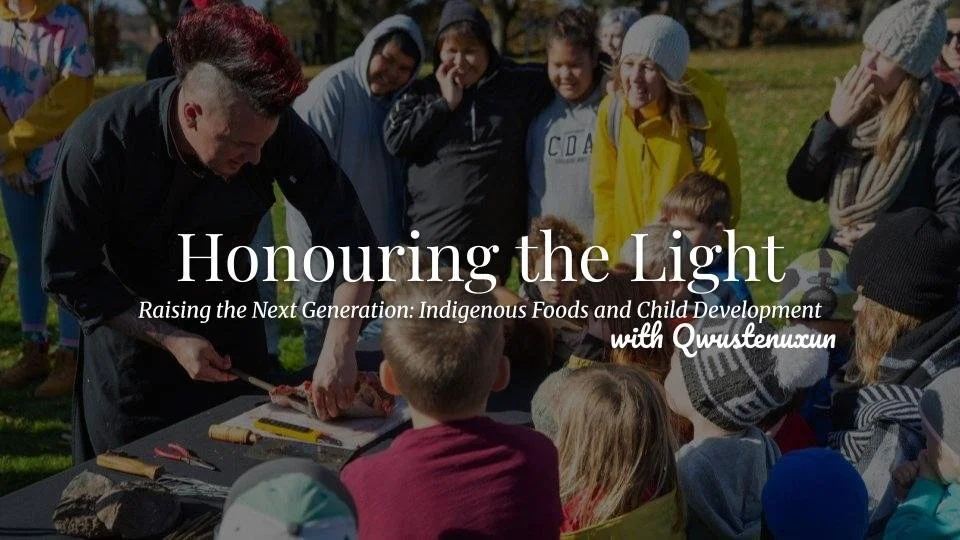
Honouring the Light
Honouring the Light is a reflective talk about Indigenous foods, seasonal cycles, wellness, and the teachings that help guide us through both dark and light times.
Through personal story, cultural teaching, and reflections from Quw’utsun food ways, Qwustenuxun shares how food connects us to land, family, memory, responsibility, and community care. This talk explores how Indigenous foods nourish more than the body. They also strengthen identity, spirit, belonging, and connection across generations.
The session invites participants to think about where food comes from, who taught us, how teachings are carried forward, and how seasonal foods can help us understand resilience, grief, joy, and renewal. It is a talk about nourishment in the fullest sense.
Honouring the Light can be adapted for youth, educators, health teams, conferences, community gatherings, and organizations seeking a meaningful keynote or learning session grounded in food, culture, and wellness.
-
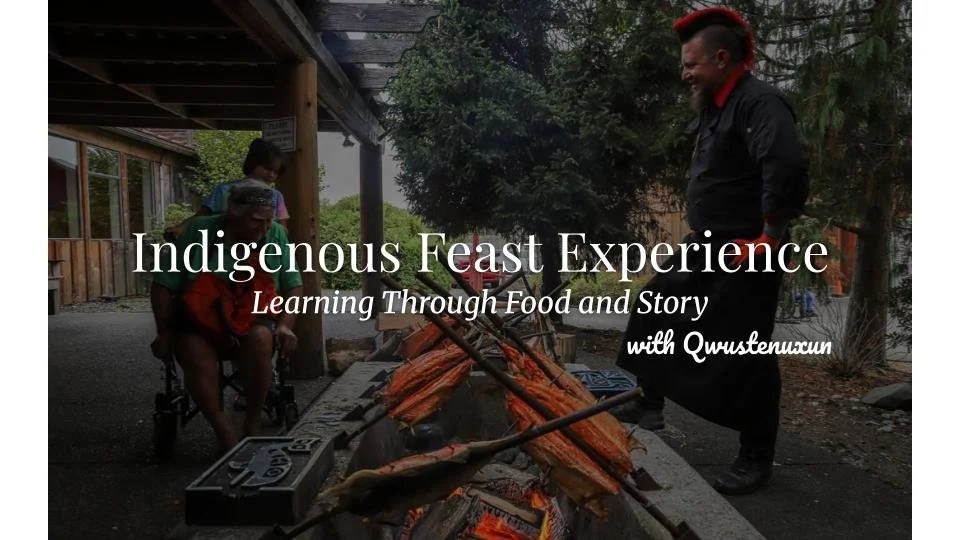
Indigenous Feast Experience
A feast with Qwustenuxun is more than a catered meal. It is a shared learning experience rooted in Indigenous foods, storytelling, fire, seasonality, and community connection.
Each feast is shaped by the group, the setting, the season, and the purpose of the gathering. A basic feast menu may include Pi’qwun salmon, fire-roasted salmon cooked over the coals; Sqi’lu, smoked fish; Xthum potatoes, bentwood steamed potatoes; Sxwesum, also known as Indian ice cream berries; steamed or dried clams; seaweeds; salads; breads; teas; and jams.
Alongside the meal, Qwustenuxun shares teachings about Indigenous food systems, harvesting, preservation, cultural protocols, fire, seasonal foods, and the role of food in bringing people together. These teachings help participants understand that Indigenous foods are relationships with land, water, family, language, law, and responsibility.
Feasts are best suited for gatherings that want something deeper than a catered meal. Because of the time, preparation, and planning involved, Qwustenuxun generally offers only one feast per month. Please inquire for pricing, availability, menu options, and travel considerations.
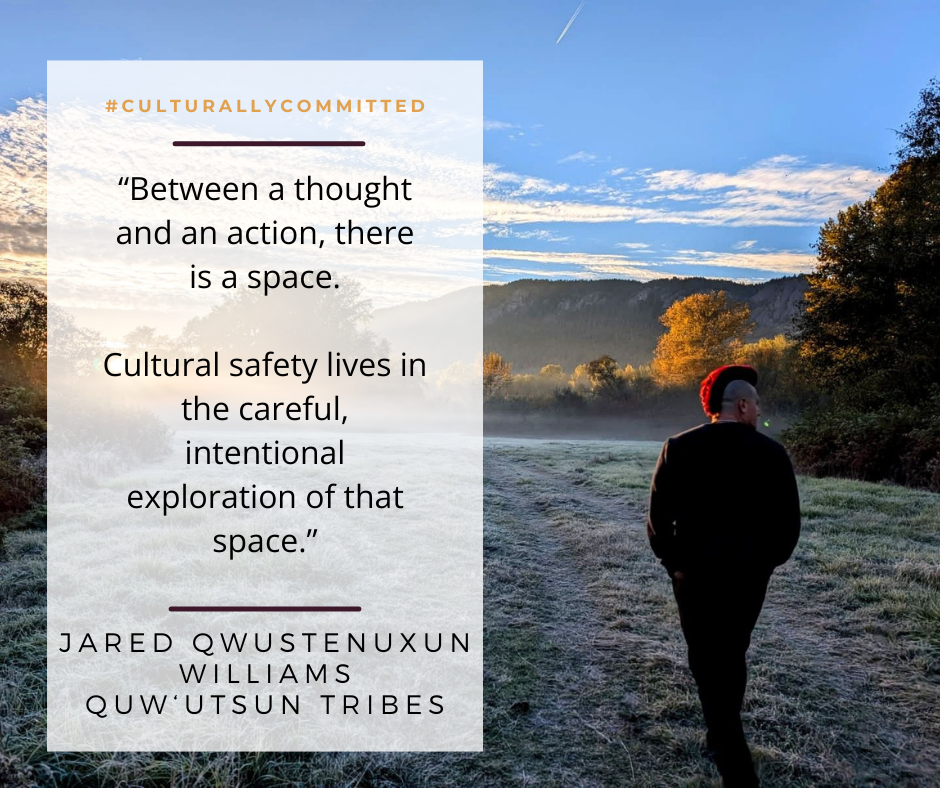
Working collaboratively with teams to create spaces where people feel safe, respected, and able to share authentically.

Indigenous Perspective Workshops
-

Unsettling Settler Words
The words we use have the power to include or exclude individuals and groups. Terms such as ‘pioneer’ or ‘frontier’ are often used to celebrate research that is cutting edge or innovative. However, these terms unwittingly reproduce settler colonialism, with their origins in the celebration of settler expansion and settlement at the expense of Indigenous peoples. This workshop will focus on how words matter and will provide insights and tools you can use to do work that contributes to just, equitable, decolonial, and sustainable futures.
-

The ten rights of reconciliation
After generations of genocide we, as both indigenous and non indigenous people, want to move forward together in a good way. It would go a long way toward uniting our two ways of life if there was a level of respect for first nations rights. Most of these rights are self evident and many are cemented in non indigenous society. Things like names, language, and culture are just a given for western people. Names like John and Susan, languages like English and French, and culture like how all our holidays are centered on the Christian europagan calendar, are all rights that western society is given. But now it's time to ensure that we give first nations people these same rights.
-

Language as a lens
Here on Vancouver Island, we see mountains with names like Douglas, Prevost, or Benson. We live in towns named Ladysmith, Courtney, Victoria, or Duncan. We pass islands called Portland, Galaino, or Wallace. We paddle on lakes with names like Kennedy, Sproat, Weeks, or Westwood. All of which have names that existed before colonization, names that connect us to legends, resources, and the true history of this place in which we find ourselves. Let’s talk about these old names and why they matter, all while exploring how simple language like plant names or tool names connect indigenous people to the environment directly.